


Plywood is a type of engineered wood made from thin layers or plies of wood veneer that are glued together with adjacent layers, having their wood grain rotated up to 90 degrees to each other. This construction technique makes plywood stronger, more durable, and less susceptible to warping and cracking than solid wood. Plywood is commonly used in carpentry, furniture making, construction, interior design, and packaging. It can be made from a variety of wood species, including hardwoods, softwoods, and tropical woods, and can come in different grades, thicknesses, and sizes.
Why Choose us?
Variety of products
Our company offers a wide range of products, can offer a wide variety of products or services to their customers. This provides more options to choose from and can improve customer satisfaction.
Production scale
Our company with more than 30 production lines can offer a range of benefits to customers, making them a desirable choice for those looking for a reliable, efficient, and experienced service provider.
Reliable quality
Our company have quality assurance mechanisms in place to ensure that their products meet certain standards. This can provide customers with confidence that they are getting a reliable product.
Excellent customer service
Our company claims to have a responsive customer service team that can assist you with any questions or issues you may have, supply you best service experience.
Competitive prices
Our company offers competitive prices, which may help you to save costs on your project.
Efficiency
The company may have a streamlined process for delivering products or offering services that reduce wait times or errors. This can be important for those who need to complete projects quickly or have a tight schedule.


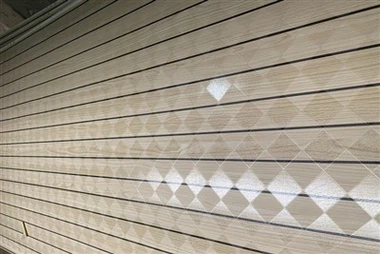

Benefits of Plywood
Plywood looks great
Let's start with what can be seen from the outside. Few people will argue against the fact that today's plywood looks great. With plywood panels typically covered with high-quality wood outer ply, plywood can look just as great as real wood. It looks even better when a good quality veneer is used.
Plywood is durable
Because modern plywood boasts of this uniform strength, it can also withstand lots of in-service stress (at all angles) for a longer time. That makes it a more durable alternative to both solid wood and other engineered wood products.
Plywood is lightweight
For all its strength, plywood is surprisingly much lighter than solid wood. That makes plywood easier to use for furniture-making. Heavier solid wood, meanwhile, can prove unwieldy or more labour-intensive, both for crafting furniture and other commercial applications.
Plywood comes in large sizes
Would a single piece of solid wood be big enough to allow you to make furniture? Of course not. Standard plywood sheets, on the other hand, come in various large sizes, with lengths of at least 1800mm and widths generally at 1200mm. This flexibility in size lets you easily predict how much plywood material and labour you will need for a particular project. So whether you're building furniture or installing ply flooring, you can plan and limit wasted material.
Plywood covers a much bigger area
Since plywood panels come in larger dimensions, it follows that plywood has it over solid wood when it comes to square foot coverage.
This becomes a huge advantage with large construction projects. There's less of a struggle for you to find just enough material in pieces that require less cutting. There will be fewer gaps or uneven ends for you to deal with, and wastage will be minimal.
Plywood can also be treated for fire prevention or moisture problems
Today's plywood can also be made to be fire-resistant and waterproof. That places it at par with the best treated solid wood material available, at a lower cost.
If you believe that solid wood is strong, you are right. Modern plywood, however, can be just as strong. The manufacturing method of plywood solves any inherent issues with the strength of the natural wood source.
This is because plywood is made of wood plies that have been pressure-bonded with adhesives, at varying angles. This gives plywood a cross-grain throughout its structure, which provides an evenly-distributed, weight-bearing strength. In contrast, solid wood proves stronger only if force or weight is applied along the grain.
Best of all, the price of plywood will always be lower than that of solid wood. Plywood is a cost-effective engineered wood product, and that makes it even more popular among homeowners and builders these days.
Cost savings don't stop at the price of plywood itself. You can utilise every square inch of a standard plywood sheet, so you save on wastage and labour costs. And because it's lightweight, transporting plywood in large quantities will cost less than solid timber.
When was the last time you had it easy creating curved surfaces with solid wood? Probably never. But if you did try something like that, the results weren't likely as great as you had wished. When you make curved surfaces using solid wood, the edges would probably be rather rough and uneven.
Plywood, on the other hand, can be made to fit any curved surface smoothly and easily. Plywood, however, doesn't split that easily because of its cross-layered structure. Handled properly, you can bend, cut, or drive a nail or screw through it to conform to a curved surface.
To say that plywood has a low carbon footprint may sound a bit ironic, but it certainly isn't an exaggeration. Yes, plywood uses wood. But its efficient manufacturing methods produce more workable sheets with less wood compared to solid wood panels.
That means more timber is conserved. That makes plywood an eco-friendly product. This is absolutely important, considering the worrisome state of the environment and the world in general today.
Applications of Plywood
The most prominent use of plywood is in structural applications. Plywood can naturally withstand a lot of stress and full weather exposure. Plywood is widely manufactured as a softwood and hardwood, and come available in various grades of finish, depending on its intended use.


1. Exterior wall sheathing
Common wall construction on new homes, especially in north america consist of a 2 foot x 4 foot or 2 foot by 6 foot frame skinned in exterior-grade plywood sheathing.
Plywood panels are used to fastened to each stud together to add strength and prevent vertical or horizontal shifting, keeping the frames structure intact and square.
This technique forms a structure that performs well under high wind and during earthquakes due to plywood is flexible properties.
2. Interior walls
Certain types of plywood are good for wood paneling or framing interior stud walls.
In most cases, the plywood will not be visible for the final finish however, some highly finished a-graded plywoods are very good for facing inwards and can painted or stained to give a stunning natural wood finish.
3. Roofing and flooring
Plywood is commonly used to sheath roofs and as a subfloor on many internal flooring projects.
On floors, plywood panels may include tongue-and-groove edges that slot together to allow them to carry the required load without shifting or movement whilst on roofs, they can act as a very durable and suitable skin prior to laying tiles, metal or membrane.
4. Other construction
It's not uncommon to find eaves and soffits covered with a plywood skin or made completely from ply.
Some plywoods are made specifically for use as a siding product to appear similar to reverse board and batten siding.
Builder contractors also commonly use plywood boards for constructing detached garages and sheds, for temporary floors and concrete forms.
5. Furniture
Plywood can be a very practical and cost effective material for building furniture.
In situations where one side needs to to look nice, a high grade plywood can be used whilst for the rest of the structure, a lower grade finish is fine.
Plywood is suitable for almost any furniture project imaginable within reason, so it's not uncommon to find it used in custom built dressers, wardrobes, built in media centres, shelves, bookcases, console tables…
6. Cabinets
Plywood is great for making cabinet carcasses for kitchens, bedrooms and more.
A good quality plywood is more than suitable for use on backs and sides of cabinets in most cases and is a far superior material to traditional chipboard or mdf as it lasts longer, doesn't split and is far more durable.
7. General projects
Due to plywood is versatility, plywood is great for many other home projects from building skateboard ramps, to rabbit hutches to doghouses.
Home diyers love plywood as it is ideal for building useful items including workbenches, sawhorses, simple step-stools and storage bins.
Grades of Plywood
A, B, C, and D. Each veneer contains two grades, with the corresponding compounds labeled as 'AB' or 'BC,' for example.
The first letter refers to the 'face' veneer,' while the second one is for the 'back' sheet.
If a plywood compound's name has an X at the end, this means it has a certain level of exposure to moisture. By definition, plywood sheets are arranged perpendicularly to each other.
Plywood can come in various thicknesses, including ½-inch, ¼-inch, and ¾-inch.
A-grade plywood
This is the highest-quality plywood and therefore typically the most expensive, since the veneers will be flawless. A-grade plywood is smooth and can be easily painted.
B-grade plywood
B-grade plywood is slightly less smooth than A-grade plywood and has a solid foundation. It usually has minor flaws and can be subject to repairs.
C-grade plywood
This type of plywood has a few knots in its sheets that are up to 1.5 inches in diameter.
D-grade plywood
The cheapest type of plywood veneers, these sheets typically haven’t been repaired. The flaws can be slightly larger and the knots in this type of plywood can be up to 2.5 inches in diameter.
Plywood Maintenance Matters

Avoid exposure to extreme weather conditions
Plywood is highly sensitive to moisture and can expand and warp if it is exposed to heavy rain or other forms of moisture.

Use appropriate coatings and finishes
To protect the surface of plywood from moisture, it is essential to use appropriate coatings and finishes such as varnish, polyurethane, or paint.
Avoid direct contact with water
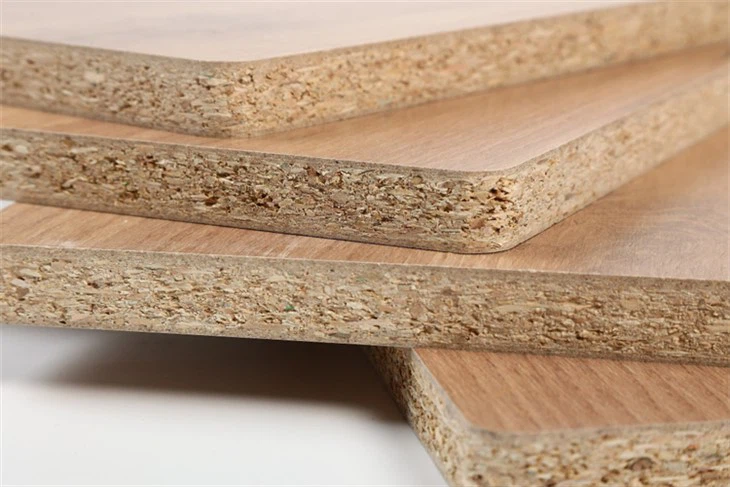
Plywood should not be used in areas where it will be continuously exposed to water, as it can become damaged and weakened.
Store plywood correctly
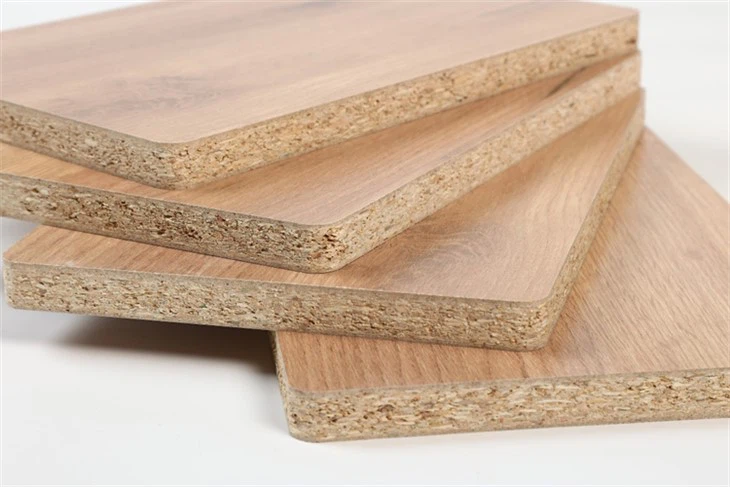
Plywood should be stored in a dry and cool place with a stable temperature to prevent any damage caused by moisture and fluctuations in temperature.
Factors to Consider When Selecting Plywood?
While wood is a natural choice and people often use lumber, a better choice is to go for plywood for doors, sofas, tables, cupboards and so on. As in all cases, you must make sure you buy only the best plywood that ensures durability and classiness. We discuss the, 4 first-hand tips to buy the best quality plywood.
Choose only the most trusted and dependable brand
Plywood is made by peeling timber logs and then bonding them together. Processing for moisture control is also important to ensure plywood does not warp or crack throughout its life. Only the best raw materials and treatments can result in durable plywood.
Ask for a warranty
When you are paying a significant amount for something, you must make sure it comes with a warranty. The brands that manufacture good quality plywood offer a warranty. This is an assurance of the durability of the product.
Do not forget to check the thickness
The thickness of plywood determines its stability and load-bearing capacity. For example, if you want to use it for paneling a wall, then you must select a plywood thickness of at least 5.5 mm. For doors and roofing, the thickness must be at least 12mm.
Consider the plywood grade
Plywood is graded on the basis of its intended usage and the number of times it can be used. For instance, grade 1 plywood can be used only once, while grade 4 plywood can be used multiple times.
Do not forget the water-resistance
When selecting plywood, make sure you do not forget to check its water resistance. The best quality plywood is manufactured using waterproof glue and is perfect for outdoor use.
How to Create the Look of Solid Wood with Plywood Panels?
At handprint, we love plywood. Even its exposed plies. But there are occasional projects where we don't want to see that iconic edge. At those times, here are three good ways to hide the stripes before painting, staining, or clear finishing.
Wood filler or spackle
You can use a sandable, paintable wood filler to transform a plywood project into the look of solid wood. Likewise, spackle is also designed to create a smooth, ready-to-finish edge. In fact, while both wood filler and spackle go on quickly with a putty knife, some say spackle applies easier, dries faster, and sands smoother. Try both for yourself, and see which you like.
When using either of these products, the first thing to look for is any spots that need a little filling, like small gaps between plies (called voids) or small chips along the edges. Next, spread an even coat down the length of the ply edge, making sure to cover it completely. Allow this coat to dry, then use #150-180 fine-grit sandpaper to blend it into a smooth finish. If needed, apply a second coat and sand it again, creating a paint-ready surface.
Thin strips of solid wood
Various types of trim moulding - narrow strips of solid wood - can hide plywood edges simply by covering them up. Screen moulding works perfectly for 3/4" plywood. For other plywood thicknesses, look for lattice strips available in several standard widths. Tack them along your edges with thin finishing nails. Fill the resulting nail holes and connection points with wood filler or spackle, then sand to blend before painting or staining.
Edge banding
The third and last concealment strategy - called edge banding - covers plywood's edges with thin, narrow strips of natural wood. Bought in a roll like tape, edge banding comes in different species and widths to match your plywood, and it can be painted, stained, or simply coated with polycrylic. And the best part? It goes on super easy using a household iron, set on cotton, no steam.
To apply, simply cut a strip of edge banding an inch or so longer than your plywood and place it along your plywood edge. Then simply run your iron up and down its length, melting the dried wood glue on the underside, bonding the strip to the edge.
While the strip is still hot, run a plywood up and down its length, applying pressure and removing air bubbles to create a tight seal with the wood. Cut off the extra and check for a strong bond along all edges and ends. If there's any lift, add more heat from your iron.
Use grit sandpaper to smooth ends and edges until blended. If you discover anywhere the glue didn't bond, run your iron over it again. Finally, finish as you would any natural wood surface, including with paint, stain, or clearcoat.
Determining how plywood is made depends a great deal on the materials used. Plywood can be made from softwoods or hardwoods. It can also be constructed of a mix of the two. Some common softwoods used to create plywood include cedar, pine, redwood and spruce but the most commonly used is Douglas fir. For hardwoods, plywood is commonly created using oak, mahogany, teek, maple or ash. If using composite plywood, the core will be made of either solid lumber pieces or particle board. Composite plywood is typically used when the project calls for very thick sheets.
There are various types of adhesive that can be used to combine the layers of wood to create a sheet of plywood. The type used depends on the usage for the plywood. For example, a phenol-formaldehyde resin will be used if the sheets are to be used for a structure’s exterior. That is because the adhesive is very strong and will resist any damage caused by moisture, an important feature for any outdoor project.
If the plywood is to be used for the interior of a structure, the adhesive used is usually either made from a soybean protein or a blood protein. However, many of these interior plywood sheets will now often use the same phenol-formaldehyde resin that is used for exterior sheets. Finally, if the plywood is to be used for building furniture, the adhesive is usually made with a urea-formaldehyde resin.
There are other materials that can also be used in the construction of plywood. For example, some projects require that a layer of metal, plastic, paper or fabric be bonded to the back or face, or sometimes both, of the plywood. This helps to make the sheet even more resistant to moisture. That plywood is referred to as overlaid plywood and is most often used in the transportation, agricultural and construction industries.
Plywood can also have a layer of liquid stain used to give it a more polished look, which is used for more decorative projects. Finally, plywood can be treated with a variety of different chemicals to promote different properties. For example, it can be treated to be more resistant to flames or decay.
Our Factory
Linyi Sealand import and export co.,ltd was established in 2009, Located in Linyi,the biggest logistic center in China.
We have professional QC team, more than 30 production line, supply you best service experience.
Our mainly product including Indoor&outdoor wpc wall panel, spc flooring, ps wall panel, pvc marble, melamine faced plywood, commercial plywood, film faced plywood, MDF, chipboard and other decoration products, etc.

Ultimate Faq Guide to Outdoor WPC Decking
As one of the most professional plywood manufacturers and suppliers in China, we're featured by quality products and low price. Please rest assured to buy cheap plywood from our factory. Contact us for more discount information.
Melamine Plywood, marble sheet, particle plywood chipboard plywood